
Portrait Lighting Setups Every Photographer Should Know
- vsah6738
- Jul 28, 2021
- 2 min read
Lighting is one of the most crucial parts of a portrait photograph. Experts use lighting to not only illuminate the background but also express mood and intentions. Meanwhile, incorrect use of lighting can make the subject appear flat and uninteresting.
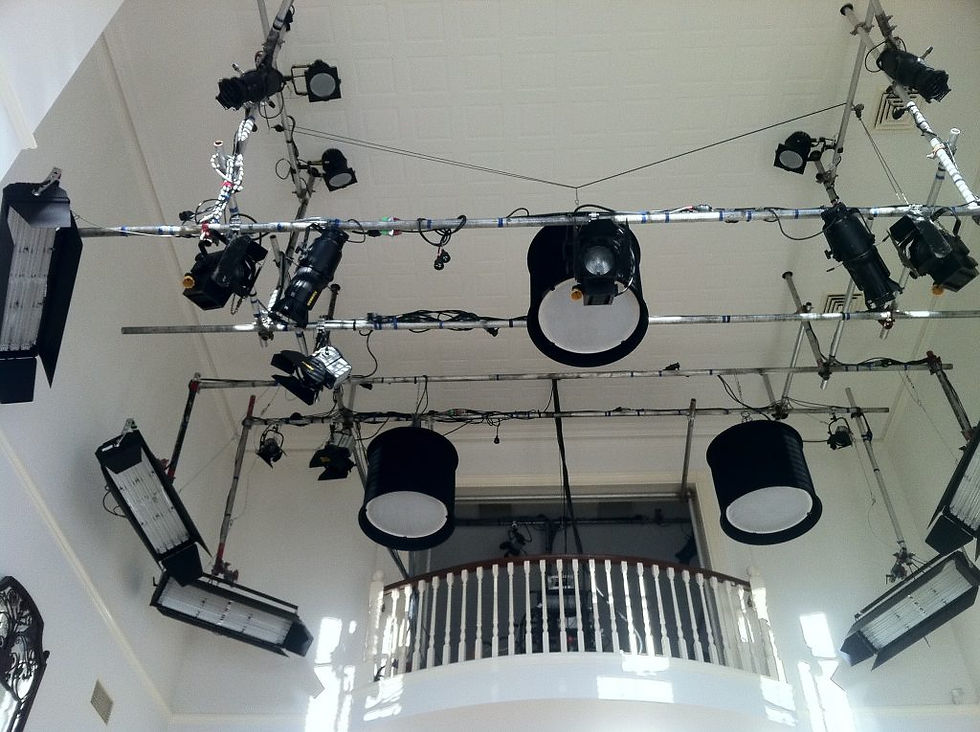
While several beginner photographers think that ambient light is the best portrait lighting setup, studio lighting Australia has its significant advantages. These lighting options provide much better and finer control over the exposure, allowing photographers to express the subject creatively.
Here are some of the most popular portrait lighting setups that every photographer must know by heart.

Classic portrait lighting setups most popular among photographers
Split lighting
As the name suggests, split lighting refers to a setup that splits the subject’s face into two, i.e., one illuminated half and one shadow half. For this shot, set up the key light perpendicular to one side of the subject’s face, preferably at eye level. This type of shot is perfect for dramatic shots and creates a sort of mystery around the subject.
Rembrandt lighting
Named after a Dutch painter who heavily favored this technique, Rembrandt lighting refers to the setup where the shadow from the subject’s nose touches the shadow on the cheek, forming a triangle of highlight on the far side. For this shot, set up the key light at a 45-degree angle to one side of the subject’s face. Then, adjust the height till the highlight triangle forms. Such shots are perfect for dramatic, moody settings.
Loop lighting
Loop lighting is similar to Rembrandt set up, but the shadow from the nose does not connect to the shadow on the cheek. For this shot, you will need to adjust the key light at an angle between 45-90 degrees, depending on the length of the nose shadow that you want. This set up is perfect for adding some depth to the subject’s face and highlight facial features.
Butterfly lighting
Butterfly lighting refers to a setup where a butterfly-shaped shadow appears under the subject’s nose. You will need to place the key light above the camera for this shot, adjusting the height compensating for the face size. Such shots create pleasing shadows below the nose and cheekbones and smoothen the complexion.
Silhouette lighting
Also referred to as rim lighting, silhouette lighting is primarily used to create abstract shots with a mysterious feeling. For these shots, you will need to place the light source behind the subject so that only the edge of the profile is illuminated. You will also need to carefully control the flash power to prevent the light from spilling over the subject’s contour.
The type of lighting that you choose majorly depends on the mood and intention that you want the shot to carry. For instance, split lighting works best when you want to convey mystery. Similarly, butterfly lighting is better suited for glamour shots. You can also study how previous photographers have used these patterns to their advantage and set up the stage light rigging Sydney accordingly.


Comments