
Safety Practices for Rigging
- vsah6738
- Mar 17, 2022
- 2 min read
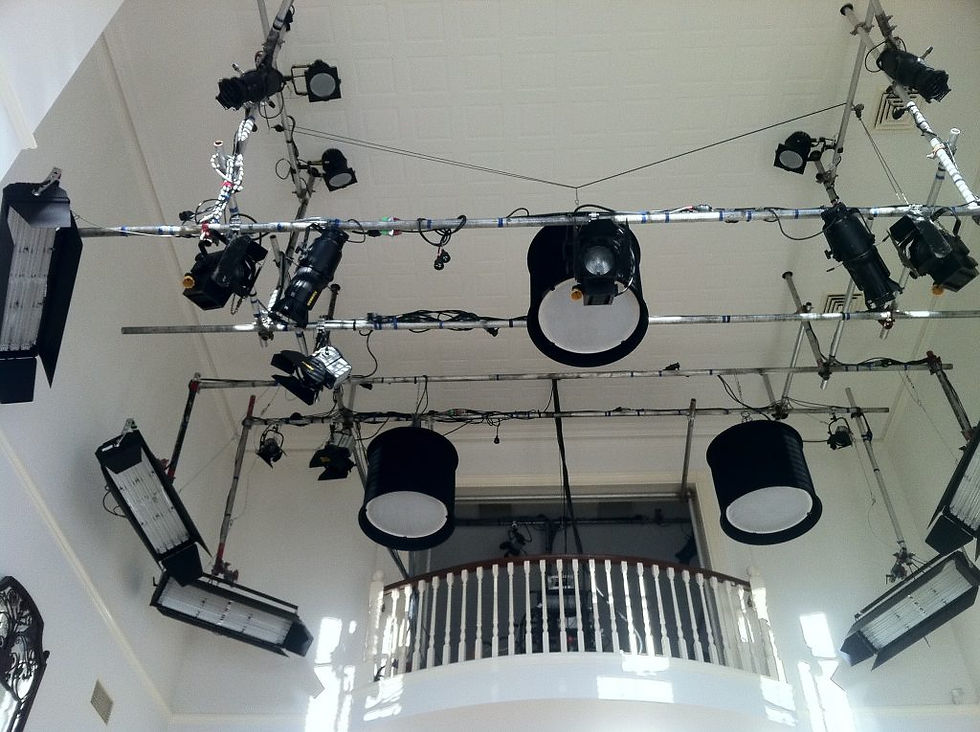
Rigging is essential in the entertainment industry, but it remains mostly behind the camera. While watching the big screen, you normally do not get a glimpse of rigging. But when enjoying a live concert, you see a large arrangement of studio lighting Australia and grips that make the performance more intriguing. Rigging is basically the technical aspect behind the camera. In the entertainment industry, rigging techniques are often referred to as grips.
What consists of rigging?

The people in the grip department remain in charge of rigging. From lifting to carrying to placing all producing equipment, they cover it all behind the scenes. This means that they are basically in charge of all the equipment that will be responsible for hoisting things or other equipment during the shoot or the live performance. Needless to say, this is quite a dangerous task and has to be carried out with utmost precision.
There is a lot of equipment for film rigging on a set. Camera rigs are used to keep the camera steady and are also important for getting the camera bent at different angles. Similarly, lighting rigs are for achieving different lighting effects or techniques during the shoot. Proper rigging is responsible for adding the oomph factor in the showbiz function. While witnessing a live concert, you understand how important it is to follow safety practices during rigging in order to avoid fatal accidents.
Rules for safe rigging
Rigging can make or break a performance. Inappropriate rigging can go to the extent of causing someone’s death. Therefore, it is essential for riggers to keep certain safety tips in mind: 1. Ensure that the environment in which the equipment is handled is safe. Before any lifting task, a rigger must inspect the crane to make sure that no parts are faulty. In the field of rigging, no technical issue is minor as that can lead to someone’s death. The machinery must be in top-notch functioning condition for smooth rigging. 2. Leave rigging for studio lighting Australia to none but qualified professionals. They must be trained extensively to handle all rigging procedures and have experience in processing heavy equipment. An expert rigger can predict an imminent danger at the slightest sign of damaged equipment and thus can prevent the accident. 3. Work with balanced loads and do not go overboard. Just like every other thing, each rigging equipment has a certain capability for loads. Check if the load is properly balanced before it is lifted into the air. Also, the load needs to have swinging space so that it does not get slammed against anything on the set and create a ruckus. It is up to the spotters and riggers to ensure that a balanced load is maintained each time.
Adhering to proper film rigging rules greatly decreases the chances of severe accidents. Safe practices will reduce property damage and injuries. Rigging is responsible for several actions on the movie set, and riggers need to be experienced and professional to carry out the process smoothly.


Comments